
UVC Low Pressure Systems
Products - Systems
UVC Low Pressure Systems
DR. FISCHER Europe develops and manufactures complete UVC low pressure disinfection systems for applications where reliable, energy-efficient, and cost-effective UVC treatment is required. These systems are designed to deliver targeted germicidal performance for surface, air, and material disinfection in industrial and technical environments.
Low pressure UVC technology is particularly effective where continuous operation, stable output, and optimized energy consumption are key factors.
Key Advantages of UVC Low Pressure Systems
Highly Effective Germicidal Performance
Optimized UVC wavelength ensures reliable inactivation of microorganisms.Energy-Efficient Operation
Low pressure technology provides high disinfection efficiency with low energy consumption.- Chemical-Free Process
Disinfection without residues, chemicals, or additional consumables. Modular System Design
Flexible configuration for integration into conveyors, chambers, and process lines.- Safe and Enclosed Operation
Systems are designed to prevent UVC exposure to operators while ensuring maximum treatment efficiency.
UVC Low Pressure Systems by DR. FISCHER Europe
Why Choose DR. FISCHER UVC Systems?
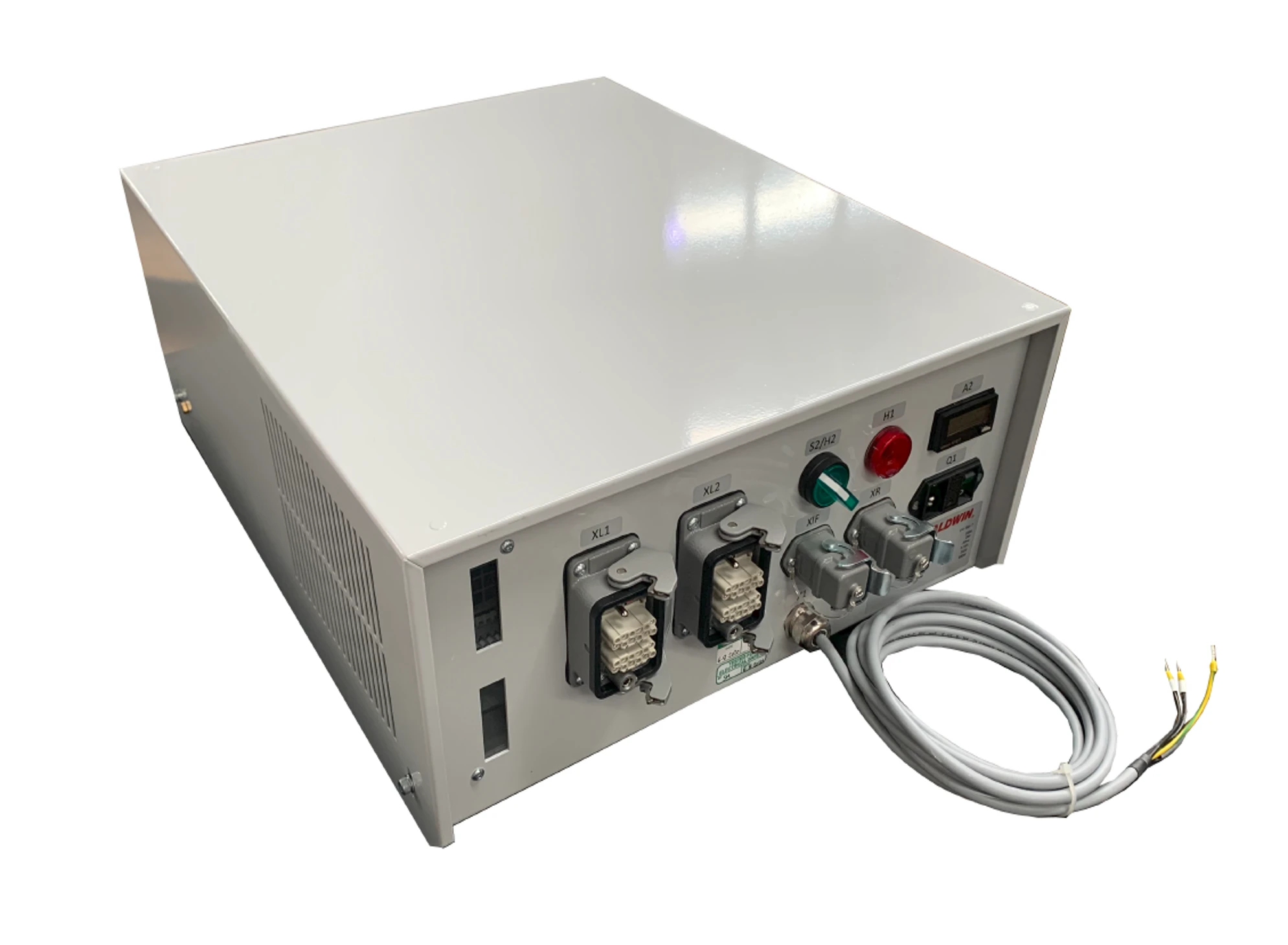
Our portfolio covers complete conventional UV curing solutions—including curing cassettes, power supplies, cooling components, and control interfaces. Depending on the required output and installation size, systems can be configured for different power classes, lengths, and line concepts.
This enables efficient curing for printing, coating, and polymerisation processes with consistent quality across the entire curing width.
Automated UVC Disinfection in Continuous Operation
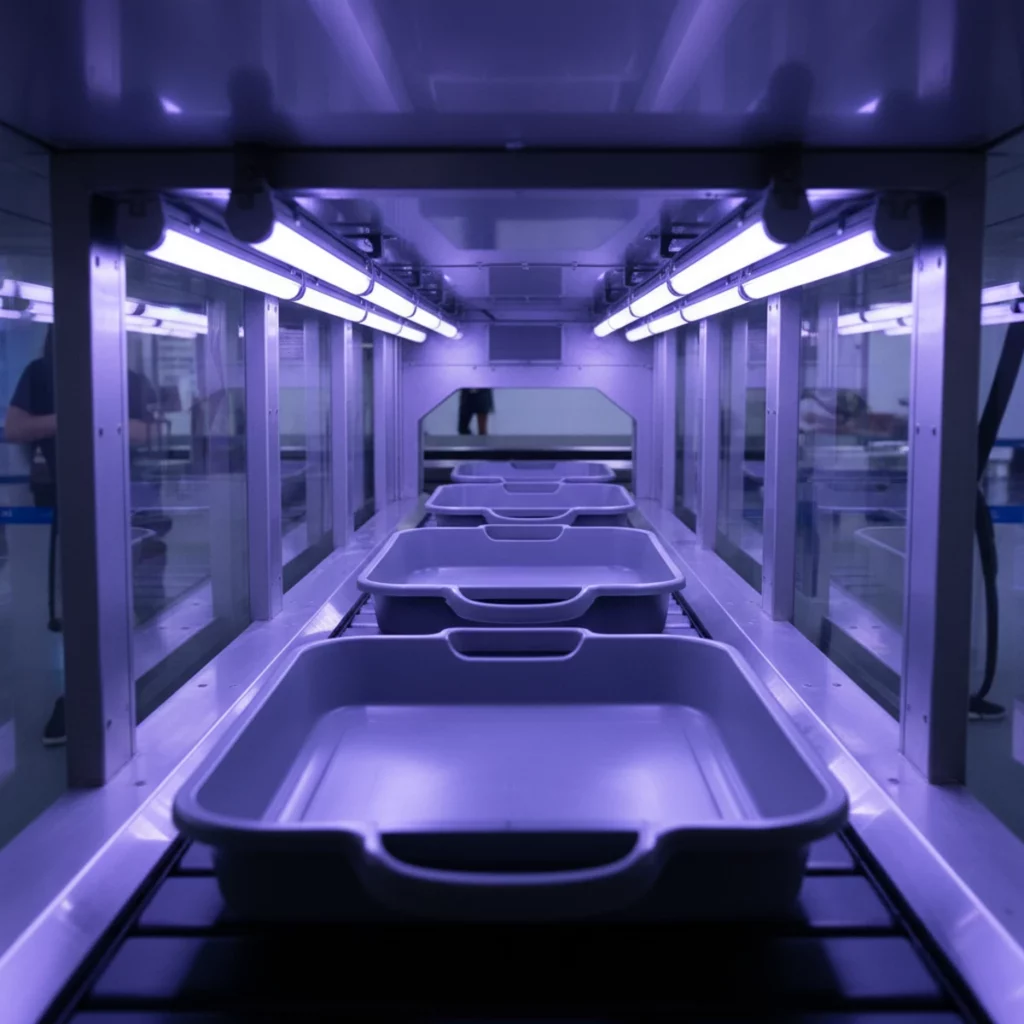
UVC low-pressure systems for airport tray hygiene are designed for seamless integration into existing conveyor and return lines. The entire process is automated, fast, and engineered for safe and reliable disinfection.
Step-by-Step Process
Tray Return & Collection
After passengers collect their belongings, empty security trays are gathered at the end of the screening line and directed back into the automated return system.
Enclosed UVC Disinfection Chamber
The trays are transported into a fully enclosed UVC chamber. This enclosure prevents any UVC exposure to passengers or staff, ensuring safe operation.
Controlled UVC Exposure
Inside the chamber, trays pass beneath or between high-intensity UVC lamps. The system is calibrated to deliver the correct UVC dose and exposure time, depending on the required disinfection performance.
Multi-Sided Irradiation
Advanced system designs use multiple UVC lamps arranged to irradiate trays from different angles. This ensures that all surfaces — including edges and recessed areas — receive effective UVC coverage.
High-Speed Processing
The disinfection cycle takes only a few seconds per tray. This speed is essential for maintaining smooth passenger flow at busy airport checkpoints.
Automatic Reintroduction
Once disinfected, trays exit the chamber and are automatically returned to the beginning of the security lane, ready for reuse.
Keeping High-Touch Surfaces Hygienic
In busy airport environments, security trays are handled by millions of passengers every year. These frequently touched surfaces can become potential carriers for bacteria and viruses, raising hygiene concerns in high-traffic areas. UVC disinfection systems provide an effective, chemical-free solution to keep these surfaces clean and safe.
The Power of UVC Light
UVC systems use a specific range of ultraviolet radiation with strong germicidal properties. Unlike UVA and UVB, UVC light has a shorter wavelength and higher energy.
When microorganisms such as bacteria, viruses, and fungi are exposed to UVC light, their DNA and RNA are damaged, preventing them from replicating. This process is known as ultraviolet germicidal irradiation (UVGI).
How UVC Systems Work in Airport Tray Handling
Integrating UVC technology into airport tray return systems enables automated, high-speed disinfection with minimal disruption to passenger flow. After use, trays are guided through enclosed UVC chambers where they are exposed to a controlled dose of UVC radiation. The system is engineered to ensure uniform coverage while preventing any UVC exposure to operators or passengers.
This approach allows airports to maintain high hygiene standards while keeping operations efficient and continuous.

Dairy Packaging Disinfection

DR. FISCHER’s Low Pressure UVC Systems provide a highly efficient, chemical-free solution for decontaminating dairy packaging such as cups and lids. By integrating these systems directly into filling lines, manufacturers can achieve rapid inactivation of bacteria, viruses, and molds on surfaces. This process ensures maximum product safety and extends shelf life without leaving any chemical residues or affecting the food’s taste.
Designed for continuous industrial operation, these energy-efficient modules offer stable germicidal performance and easy integration into automated conveyors. This technology allows dairy producers to maintain the highest hygiene standards while optimizing operational costs and meeting strict food safety regulations through a sustainable, dry disinfection method.
System example for Dairy Packaging Disinfection
Typical Applications of UVC Low Pressure Systems:
Surface Disinfection
Reliable inactivation of bacteria, viruses, and microorganisms on conveyor belts, trays, and product surfaces.Packaging & Food Industry
Hygienic treatment of packaging materials, lids, and containers before filling processes.Airport & Public Security Systems
Automated UVC disinfection of security trays and high-contact objects in high-traffic environments.Conveyor-Based Disinfection Lines
Continuous UVC treatment integrated into automated transport systems for industrial throughput.Air & Enclosed Chamber Disinfection
UVC modules used inside air handling units or enclosed systems to reduce microbial contamination.Medical & Laboratory Equipment
Surface and equipment disinfection in controlled environments requiring chemical-free hygiene solutions.
Low-pressure UVC systems deliver energy-efficient, uniform germicidal irradiation, making them ideal for continuous disinfection processes where safety, reliability, and operating cost control are essential. Built with food-grade stainless steel, our systems strictly comply with the highest food industry standards.
Our Solutions for UVC Low Pressure Systems:
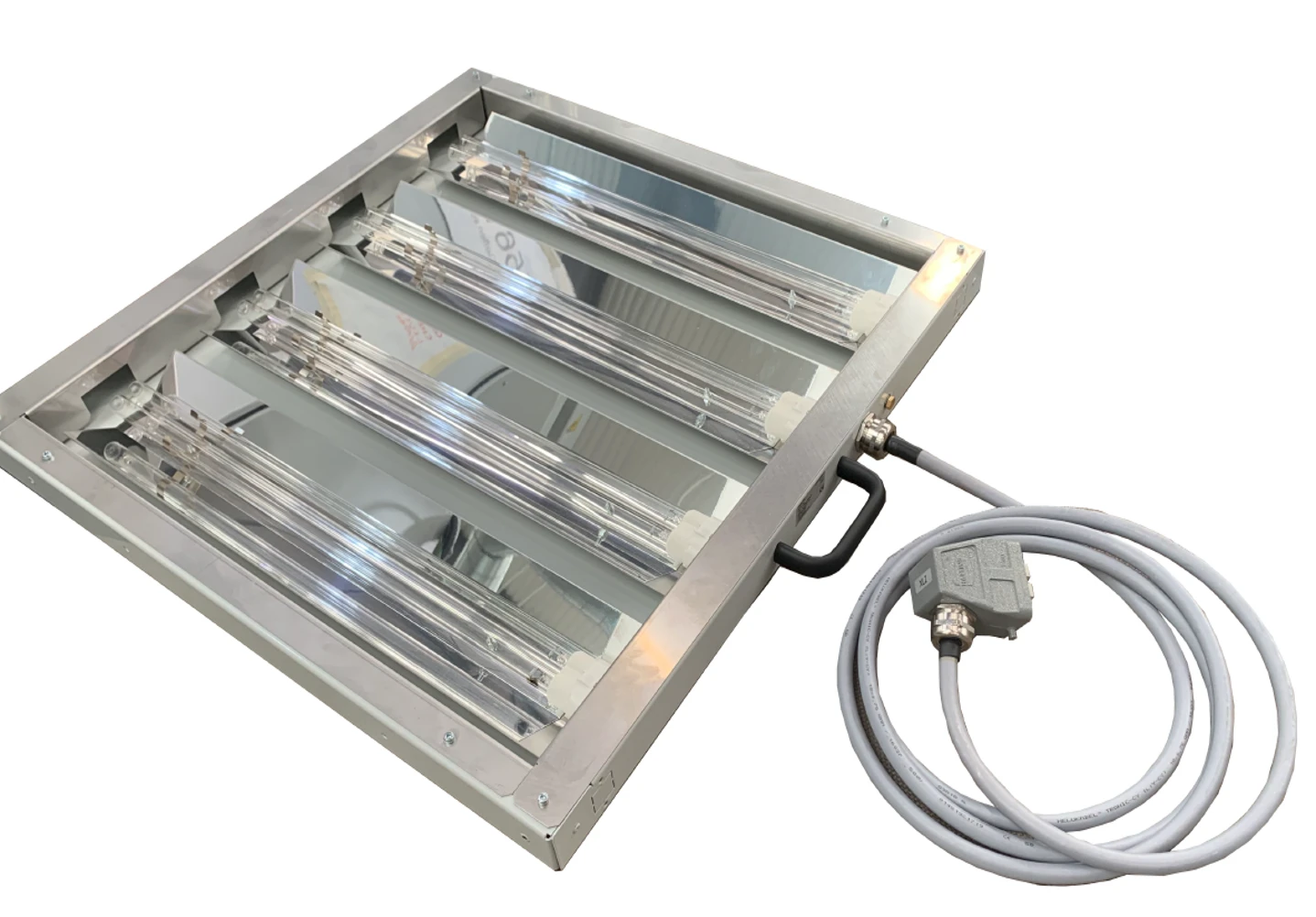
Module with 4 UV Low Pressure Lamps, 300W
Efficient and reliable low-pressure UVC system designed for energy-saving continuous disinfection in compact installations.
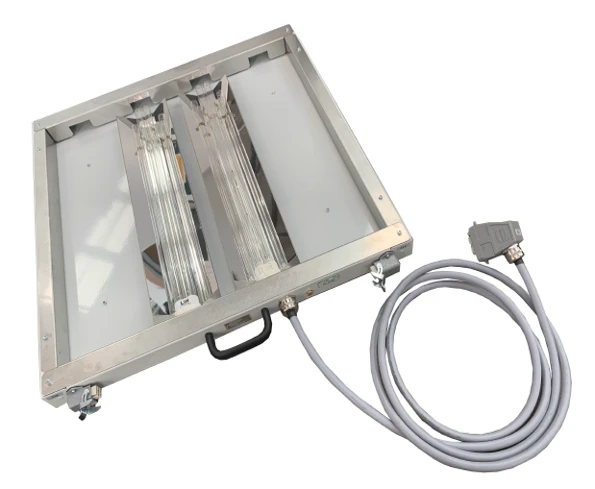
Module with 2 UV Low Pressure Lamps, 150W
High-performance low-pressure UVC system engineered for demanding disinfection tasks with increased treatment area and process reliability.
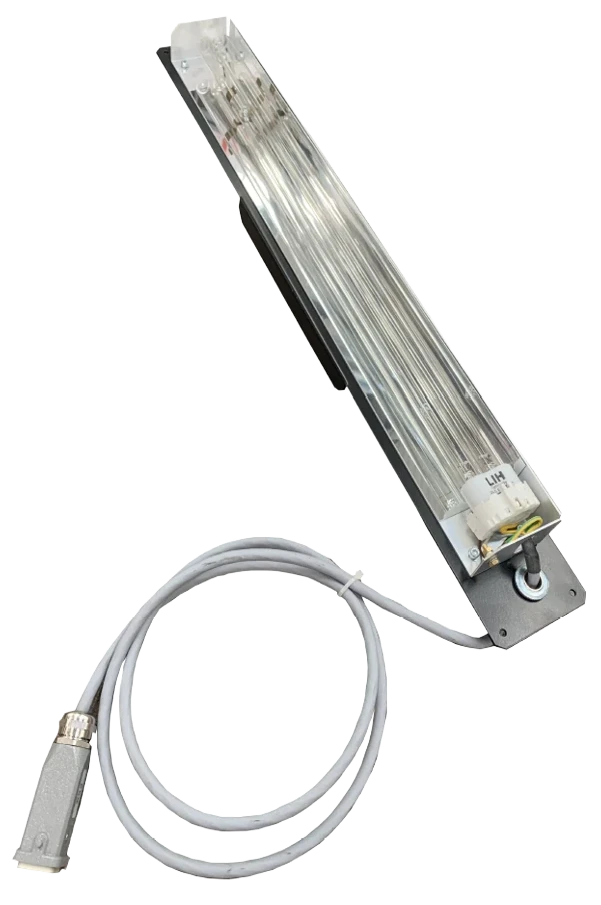
Module with 1 UV Low Pressure Lamp,
75W
Compact low-pressure UVC module with optimized lamp arrangement for uniform irradiation and enhanced surface coverage.
Contact us
Located in Pont-à-Mousson in Eastern France, it is the largest factory of the group. This entity is also the largest European center of expertise that develops, manufactures, and markets infrared heating lamps and modules, UV lamps and modules, halogen lamps, as well as LED solutions.