
Measurement Systems
Products - Components
UV Measurement Principle
The DR. FISCHER UV measurement system is based on a robust sensor design using a UV-transmissive quartz glass rod integrated into a metallic sensor body. The metallic housing acts as a waveguide, directing UV radiation from the lamp to the sensor element inside the probe.
This design ensures:
Reliable UV signal transmission
Mechanical robustness in industrial environments
Stable and repeatable measurement results
The system is specifically engineered for integration into machines, allowing UV irradiance to be measured exactly where it matters—in the active process zone.
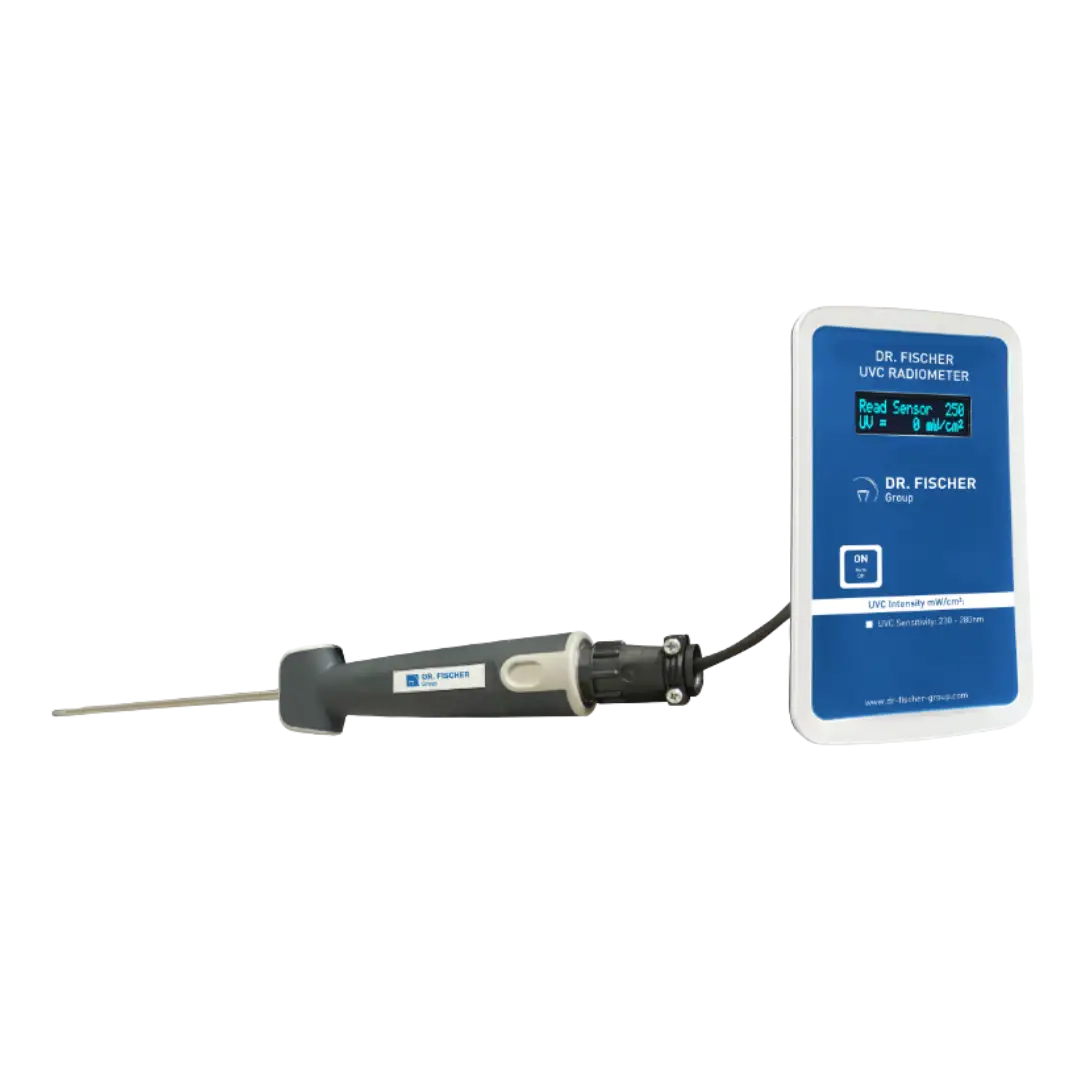
Key Advantages of our Measurement Systems
Precise UV Irradiance Measurement
Accurate measurement of UV intensity directly at the process-relevant position.Reproducible Sensor Positioning
Defined mechanical fixation ensures identical depth and orientation for repeatable results.Robust Industrial Design
Quartz glass rod and metallic sensor housing provide durability in demanding environments.High Measurement Speed
Fast sampling rate enables real-time monitoring and precise process evaluation.Optimized for UVC Applications
Spectral sensitivity tailored to 230–280 nm for hygiene and disinfection processes.
Measurement Systems from DR. FISCHER Europe
Measurement Systems:
Reliable measurement is essential for stable UV processes, consistent product quality, and reproducible results. DR. FISCHER Europe offers precise UV measurement systems designed to monitor irradiance directly inside machines and production environments.
Our measurement solutions support process validation, system setup, and ongoing quality control—especially in applications where UV intensity directly influences performance and safety.
Technical Specifications
| Technical specification | Value |
|---|---|
| Spectral range | 230–280 nm |
| Max. power input | 2 W/cm² |
| Measuring range | 0–2 W/cm² |
| Display | LCD, 2 × 16 digits |
| Display range (x1) | 0.2–199.9 mW/cm² |
| Display range (x10) | 2.0–1,999 mW/cm² |
| Sampling rate | 0.005 sec (200/sec) |
| Power source | 4 × 1.5 V AAA batteries |
| Power consumption | 20 mW |
| Dimensions (handheld display) | 120 × 75 × 25 mm |
| Weight (handheld display) | 150 g |
| Dimensions (rigid rod) | Ø 6 × 280 mm |
| Length (complete probe) | Handle 180 mm, overall 440 mm |
| Operating temperature |
Probe: 0–70 °C Probe withstands up to 400 °C for max. 10 sec Handheld housing: max. 50 °C |
| Calibration accuracy | ±5% (if used less than 100 hours of measuring time and calibrated yearly) |
| Warranty | 2 years from the date of purchase |
| Note | All technical specifications can be subject to adaptations. |
Probe withstands up to 400 °C for max. 10 sec
Handheld housing: max. 50 °C
Installation Options
DR. FISCHER UV measurement systems can be installed in different ways depending on the application:
In-Machine Measurement
The sensor is installed inside the machine to measure UV irradiance at a predefined depth and rotation, enabling precise monitoring of the actual process conditions.
Near-Material Measurement
The sensor can be positioned as close as possible to the material or surface, allowing direct measurement of the UV radiation that effectively reaches the product.
Both installation concepts support consistent, reproducible measurements during setup, validation, and production.
Fixation Concept
Fixation Plate on the Sensor Holder
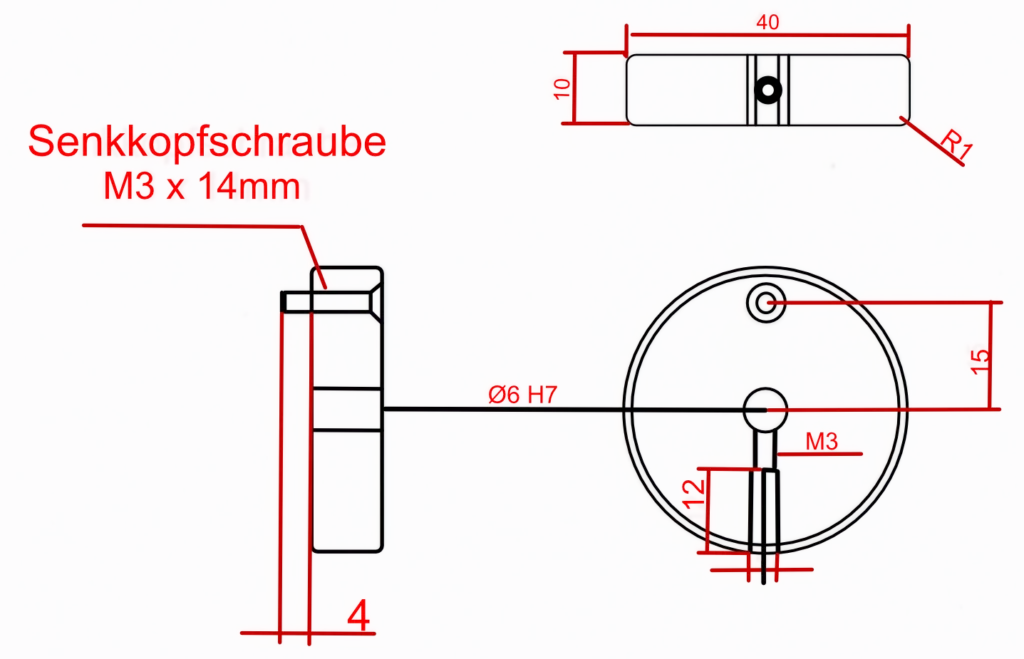
The first fixation plate is mounted directly on the sensor holder. A fixation pin with a diameter of 3 mm and a length of 14 mm ensures precise alignment.
Fixation Plate on the Machine
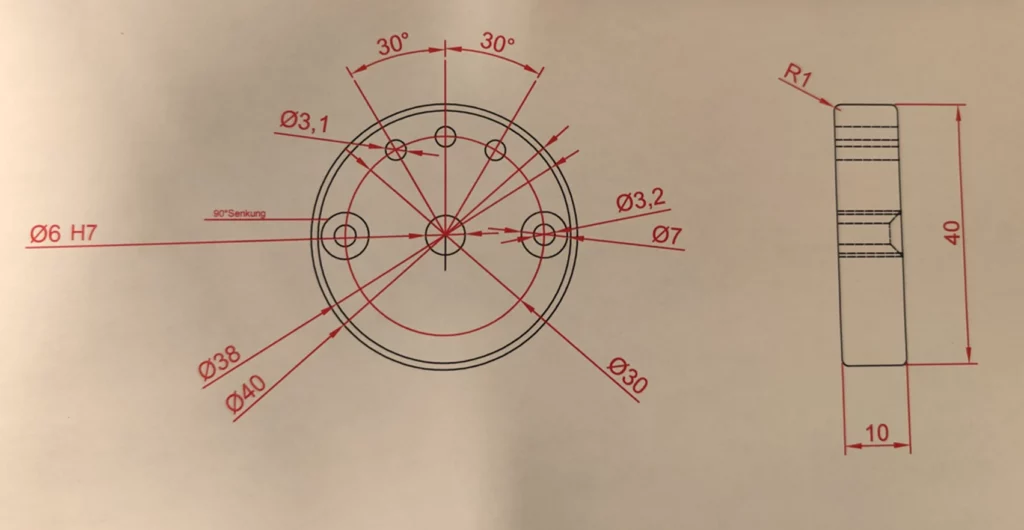
A second fixation plate is installed on the machine holder. One fixation plate per measuring position is sufficient to define sensor orientation and repeatability.
This setup guarantees that every measurement is performed under identical mechanical conditions.
Fixation plate on the holder of the Dr. Fischer UV sensor. The fixation pin has a diameter of 3 mm and a length of 14 mm:
Fixation plate 2 that should be fixed on your machine holder. One fixation plate per measuring position and one whole with a diameter of 3,1 mm for the fixation pin is sufficient in your application to fix the orientation of the sensor:
Sensor Positioning & Mechanical Design
To ensure reproducible measurements, the system uses defined mechanical reference points:
Fixed Measurement Distance
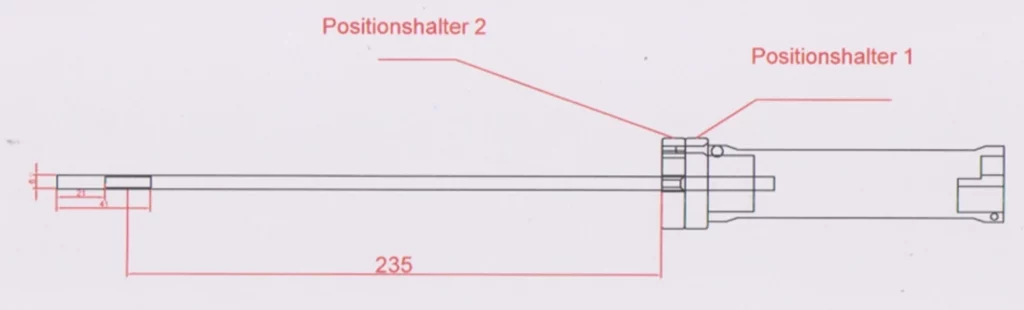
The distance from the second fixation plate to the center of the UV sensor is precisely defined at 235 mm, ensuring consistent positioning across machines and installations.
Defined Orientation
Fixation plates and pins ensure that both depth and rotational orientation of the sensor remain identical for each measurement position.
This mechanical concept allows:
Exact repositioning of the sensor
Comparable measurements over time
Reliable process documentation
Mechanical Design:
235 mm from the second fixation plates to the mid of the UV sensor.
Sensor Positioning:
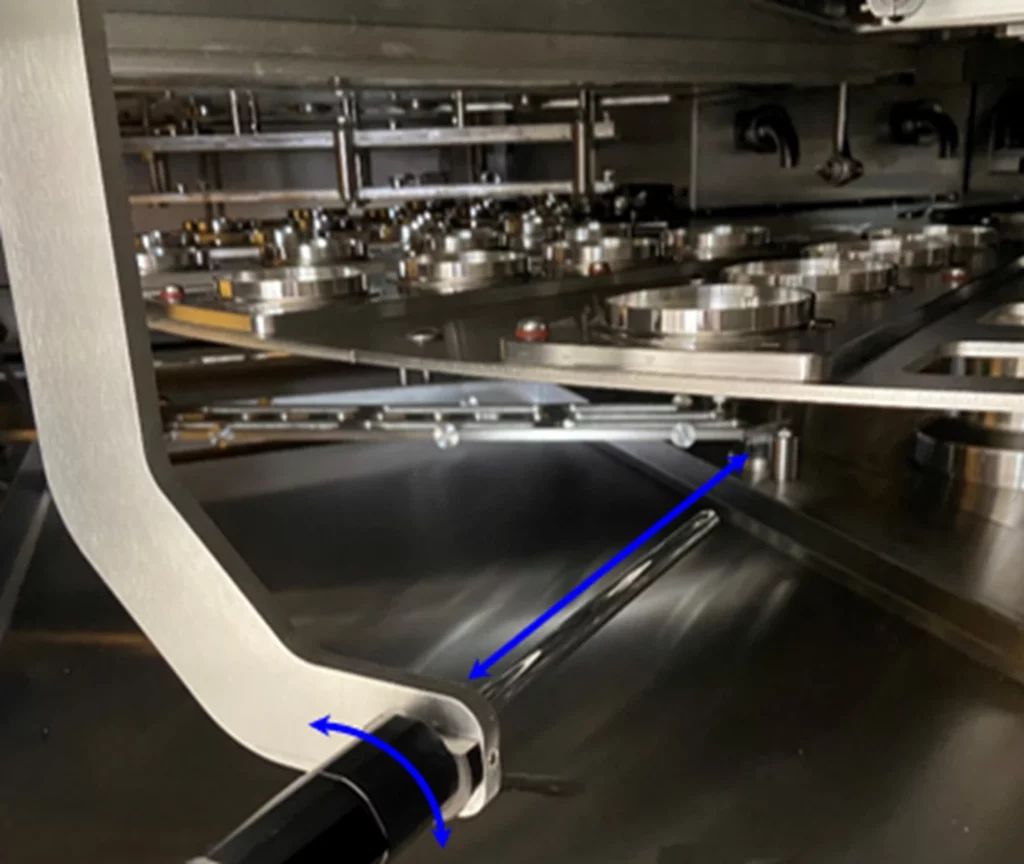
Installation to measure the UV irradiance in your machine with a predefined and reproduceable depth and rotation where you have to design the stainless steel holder fitting to your machine:
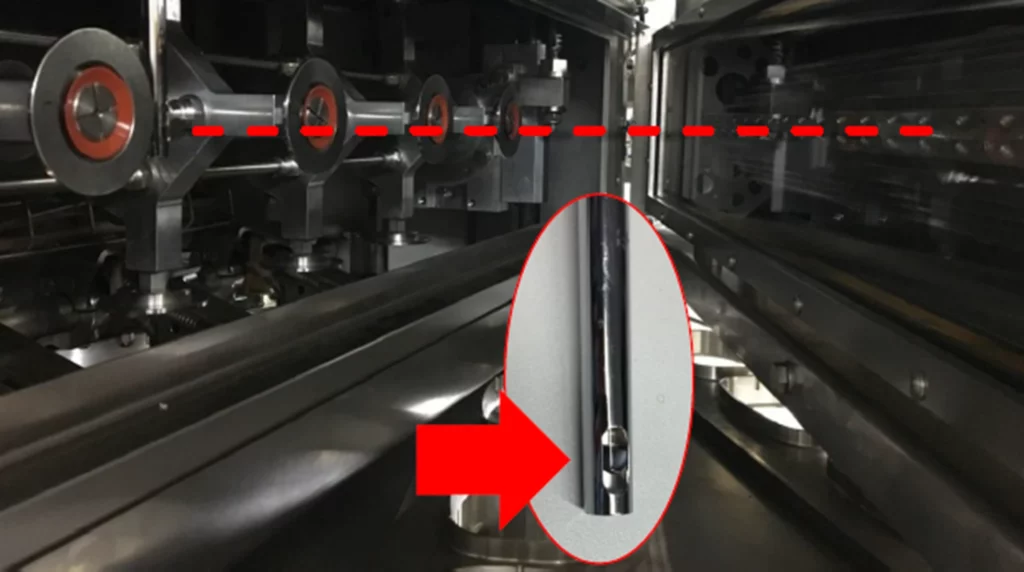
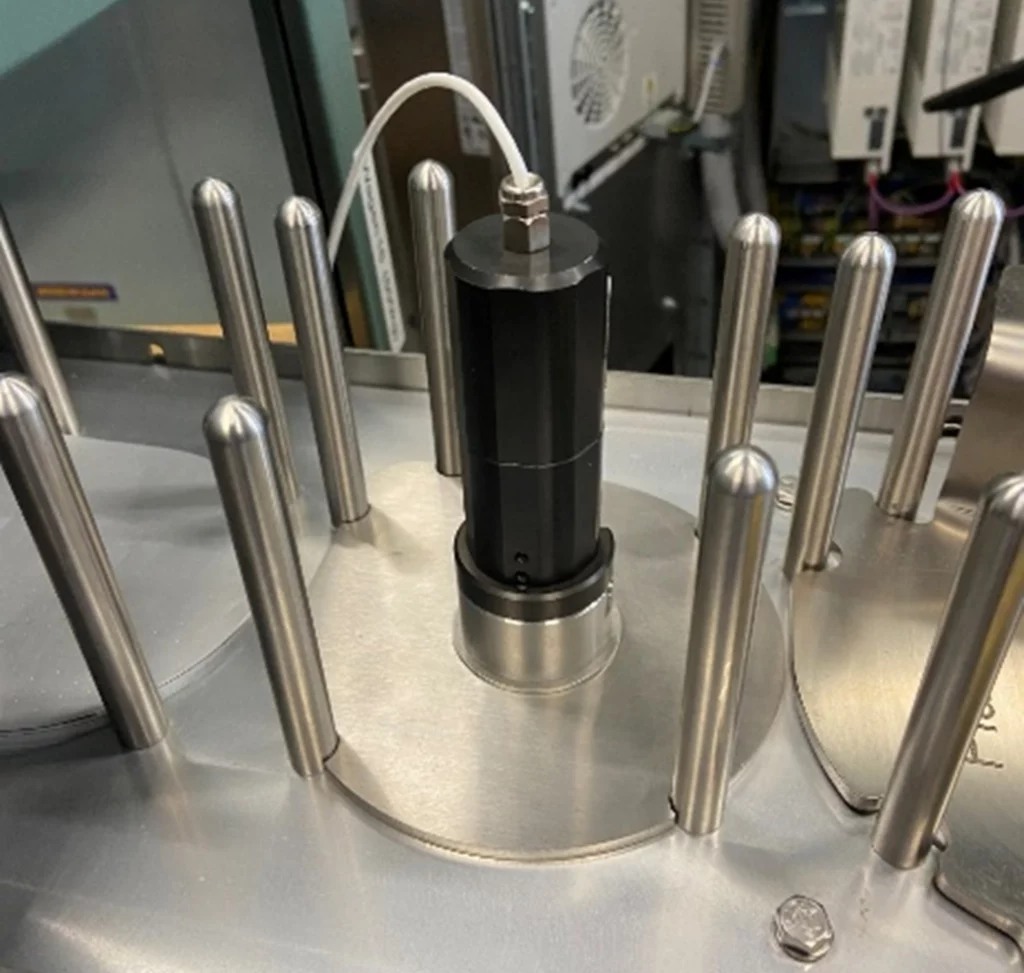
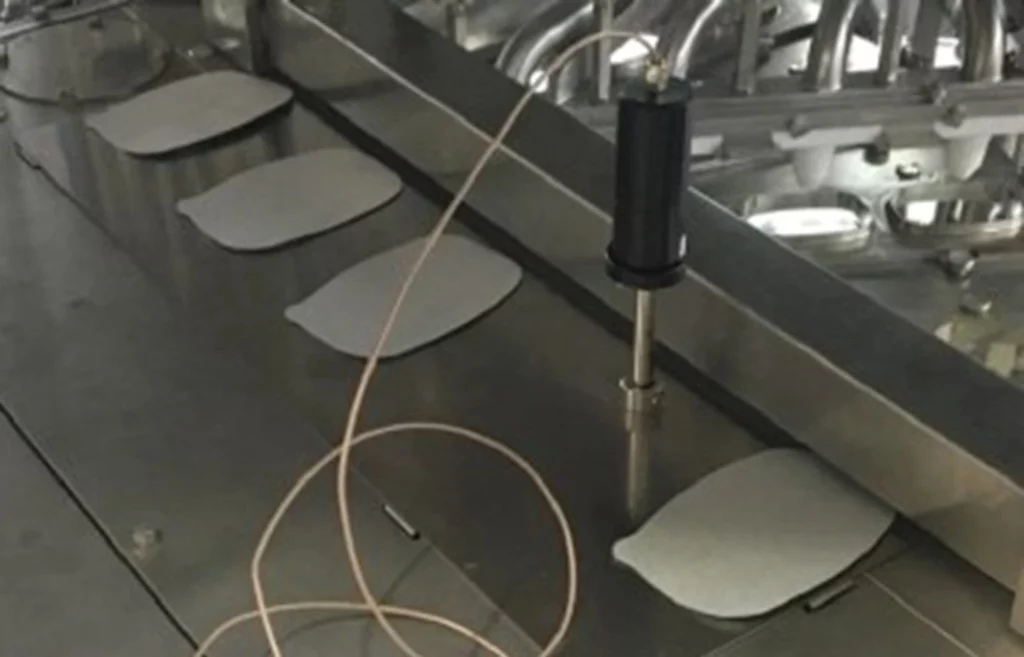
Installation to measure the UV radiation at the position of your materials with a predefined and reproducable depth and rotation where you have to design the stainless steel plate that holds the Dr Fischer UV sensor in the position as close as possible to the position of your material/surface:
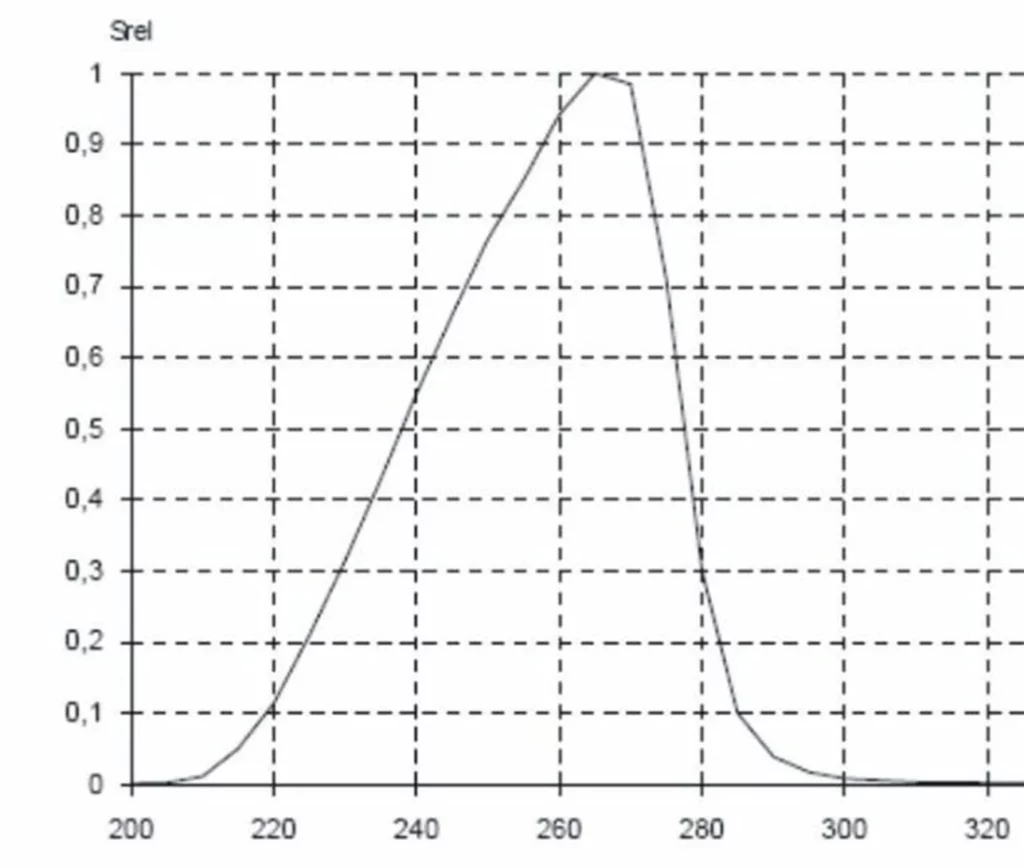
Spectral Sensitivity
The sensor is optimized for UVC applications with a spectral sensitivity range from 230 to 280 nm.
This makes it ideal for monitoring UVC lamps and systems used in disinfection, surface treatment, and hygiene-critical processes.
Typical Applications of UV Measurement Systems:
System Setup & Commissioning
Verification of UV irradiance during installation and initial system setup.Process Validation & Qualification
Reliable measurement of UV intensity to validate processes and ensure compliance with specifications.Quality Control & Process Monitoring
Continuous or repeated measurements to maintain consistent UV performance over time.UVC Disinfection Systems
Monitoring UV dose in hygiene-critical applications such as surface, air, and packaging disinfection.Machine Development & Optimization
Precise UV measurements to support system optimization, design validation, and performance tuning.Maintenance & Troubleshooting
Identification of lamp aging, contamination, or system deviations through reproducible measurements.
By using precise and reproducible UV measurement systems, manufacturers ensure stable processes, documented performance, and consistent quality across all UV-based applications.
Selected Examples from Our Measurement Systems
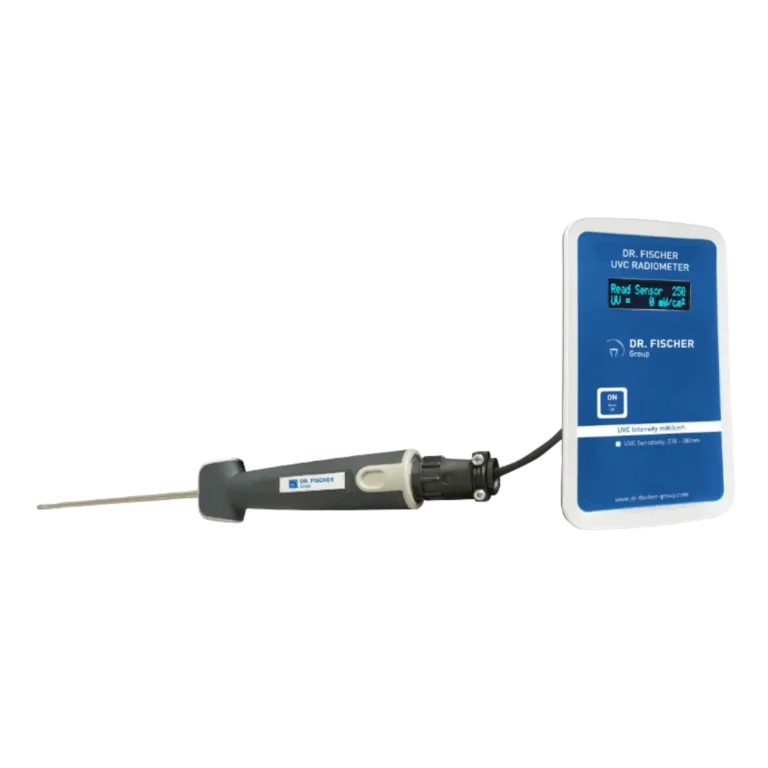
UV Measurement System
Precise and reproducible measurement of UVC irradiance directly at the process location – designed for reliable monitoring, validation, and quality control in industrial UV applications.