IR Medium Wave Carbon (1200-1400K)
Products - Light Sources
Medium Wave Carbon Infrared Heating Emitters
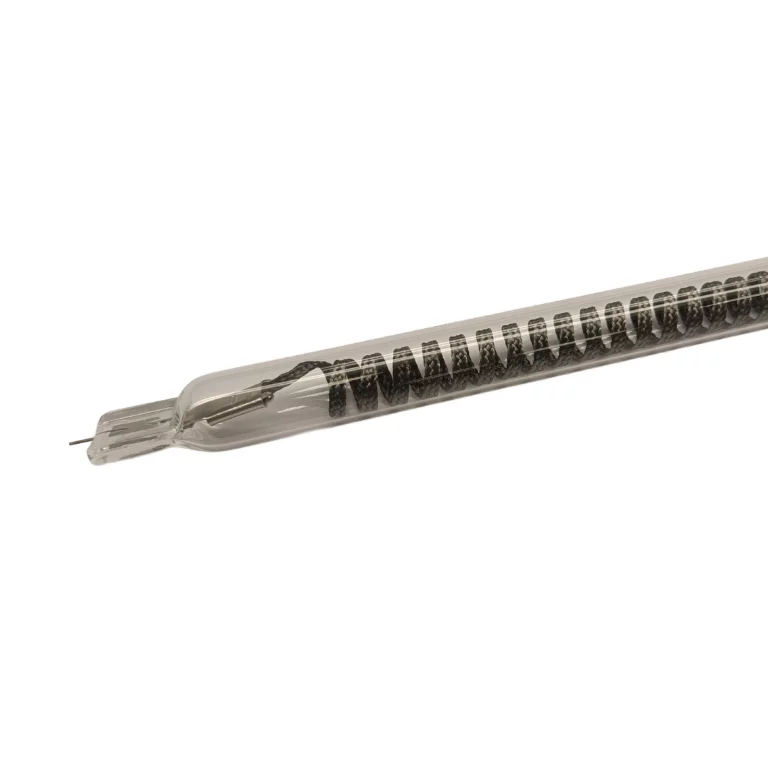
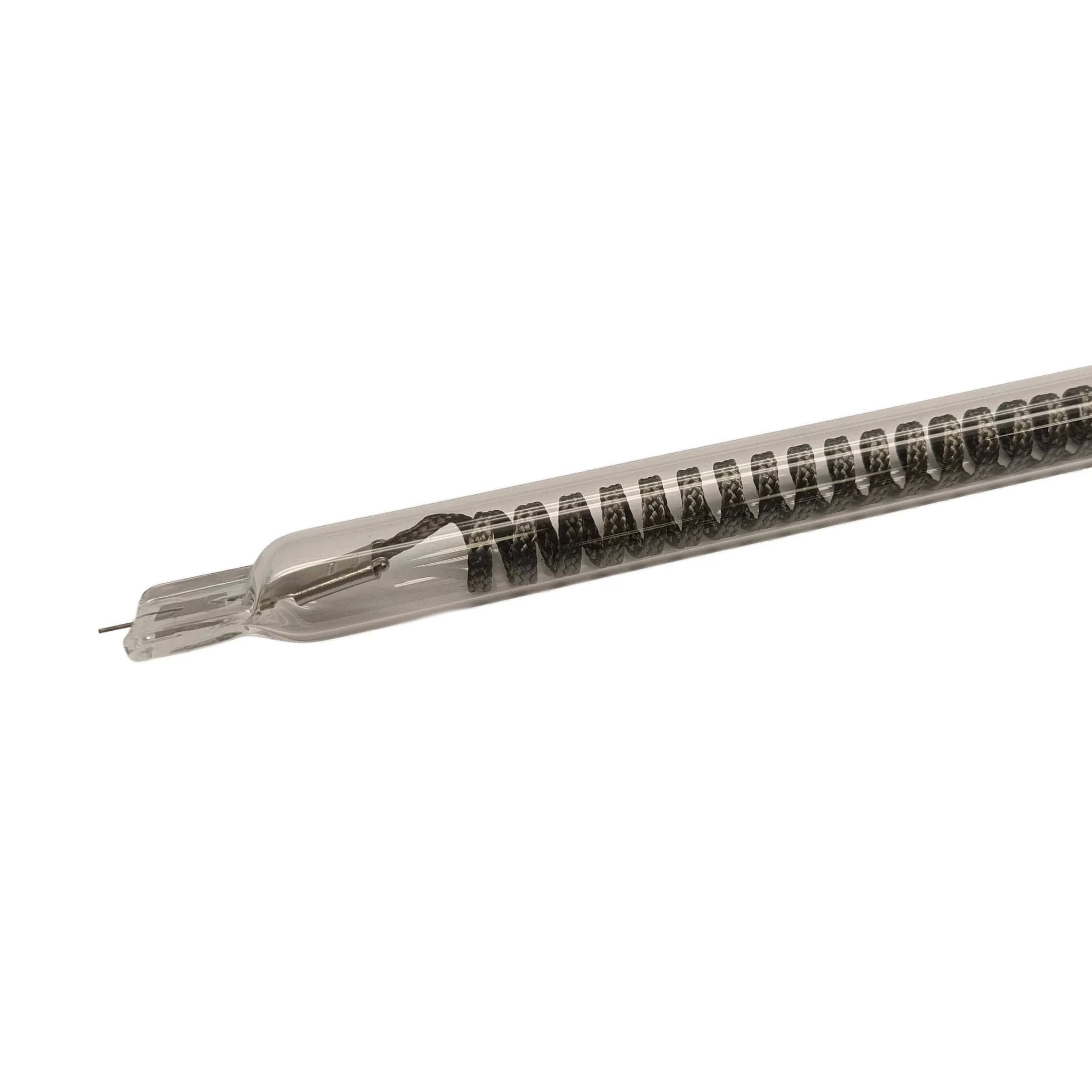
Medium wave carbon infrared emitters combine high energy efficiency with excellent temperature control. Their fast heating and cooling behavior enables responsive process adjustment and reduced energy loss during idle times. Because carbon elements emit a significant portion of energy in the far-infrared range, they are highly effective for materials with higher moisture content or sensitive surfaces.
Additionally, carbon fiber heating elements are known for their durability and long operating lifetime, offering a stable and cost-efficient heating solution for many industrial processes.
Key Advantages of IR Medium Wave Carbon (1200-1400K)
Energy-efficient and responsive heating
Quick heat-up and cool-down for reduced waste and precise control.Durable carbon fiber technology
Long service life for lower maintenance and replacement costs.Excellent absorption in moisture-rich materials
Ideal for drying, heating, and conditioning processes.Versatile system integration
Available in single and twin tube formats for maximum flexibility.Cost-effective infrared solution
Strong performance across mid-temperature applications.
IR Medium Wave Carbon (1200-1400K) from DR. FISCHER Europe
Key Facts of IR Medium Wave Carbon:
DR. FISCHER carbon medium wave infrared emitters operate at a coil temperature around 1200 – 1400 K, making them suitable for applications where gentle yet efficient heating is required. Tube dimensions range from 12 mm to 16 mm in single versions and up to 33 × 15 mm in twin execution. Heating lengths up to 1000 mm (twin & single) ensure a broad coverage of industrial requirements. Power densities around 60 W/cm support controlled and uniform heating performance.
Specifications of IR Medium Wave Carbon (1200-1400K)
These medium wave carbon emitters are designed for reliable and continuous use in industrial heating environments. Their stable output and long lifetime help improve production efficiency by minimizing downtime. With a variety of lengths and geometries available, they can be easily integrated into existing equipment or used in new machine designs.
Specifications
| Feature | Specification |
|---|---|
| Color temperature of the coil (K) | Approx. 1500 K |
| Tubes (section in mm) |
1) 33 × 15 (twin) 12 mm to 16 mm (single) |
| Heating length (mm) |
1000 mm (twin) 1000 mm (single) |
| Max length single/twin tube (mm) | 1600 |
| Power density (W/cm) | 60 |
| IR reflectors | ||||||
|---|---|---|---|---|---|---|
| Reflectivity | Durability | Cost | Radiation orientation | Main advantages | Main drawbacks | |
| Gold | ☆☆☆☆☆ | Bad | €€€€€ | Specular | - Best reflectivity - No thermal inertia |
- Low temperature resistance (<600°C) - High cost |
| White ceramic | ☆☆☆ | Very good | €€ | Diffuse | - Good price-performance ratio | - Reflectivity 10 to 15% lower than gold |
| MLRI | ☆☆☆☆ | Very good | €€€ | Diffuse | - Reflectivity between the white ceramic and gold | - Slightly more expensive and slightly less stable than white ceramic |
| LRP | ☆☆☆☆ | Excellent | €€€€ | Specular | - Reflectivity close to gold - Auto-cleaning - Longer lifespan than all other reflectors |
- Expensive to start with (but no need to replace it with the lamp) - Thermal inertia |
| Highly reflective aluminum | ☆☆☆ | Good | €€€ | Specular or diffuse (depends of the finish) | - Can be combined with other reflectors | - Added piece → takes more space |
Typical Applications of IR Twin Lamps:
Drying and Curing
Fast and efficient curing of coatings, adhesives, inks, and varnishes in industrial processes.Plastic Forming and Shaping
Precise and uniform heating of thermoplastic materials for forming, bending, and welding applications.Food Industry Processes
Controlled infrared heating for baking, browning, drying, and sterilization in food production.Textile and Paper Industry
Rapid drying of inks, coatings, and finishes on textiles and paper surfaces.Electronics and Semiconductor Manufacturing
Targeted heating for bonding, soldering, and component processing with high accuracy.Surface Treatment and Coating
Enhanced curing and drying of paints, lacquers, and industrial coatings with minimized heat loss.
By leveraging the efficiency and flexibility of IR Twin Lamp technology, you can achieve faster process times, reduced energy costs, and reliable results across a wide range of industrial heating applications.