IR Long Wave Kanthal Lamps 1200K
Products - Light Sources
Long Wave Infrared Heating Lamps (Kanthal)
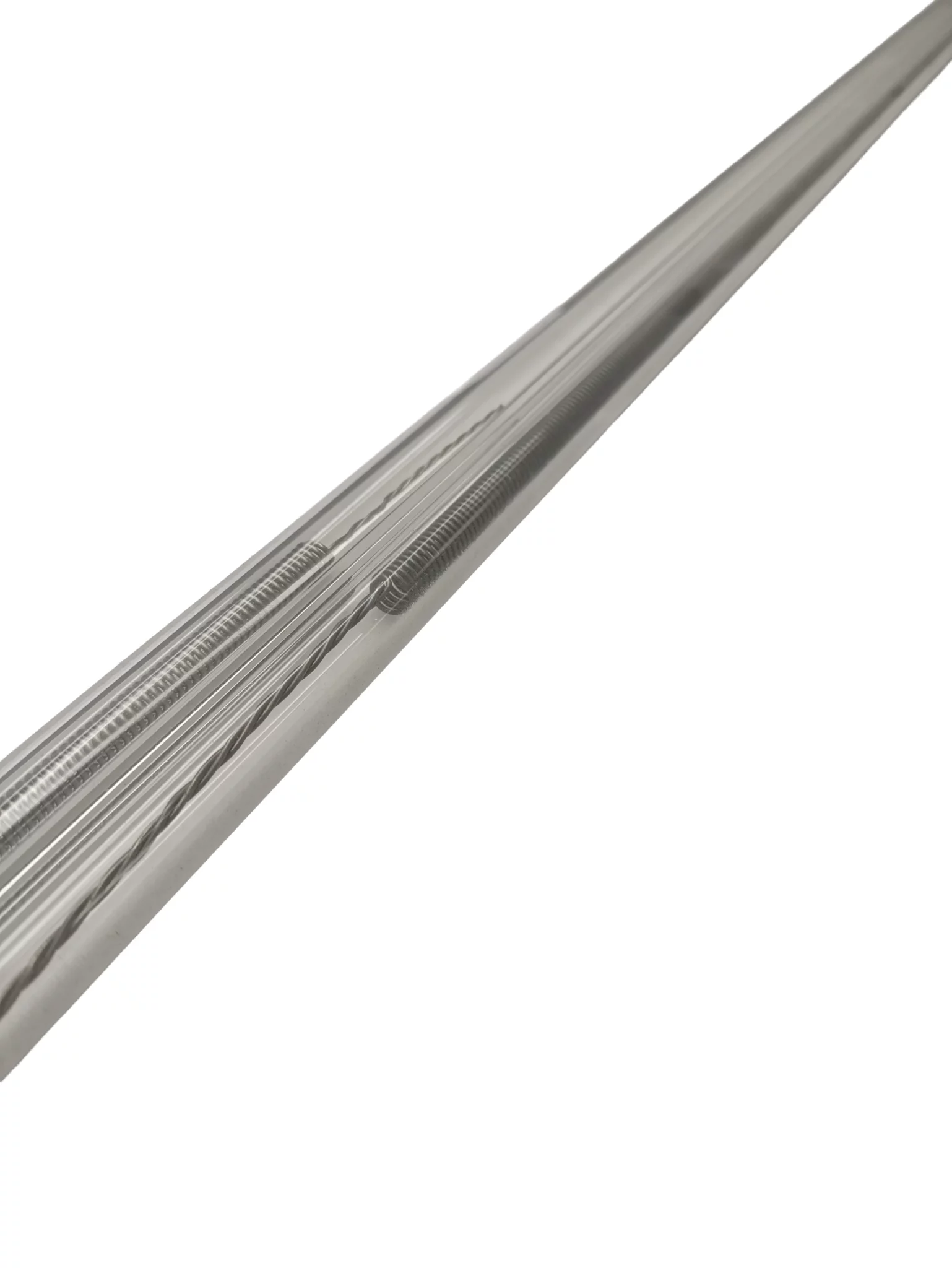
Long wave infrared heating lamps operate in the far-infrared spectrum, delivering gentle, uniform radiant heat. They warm materials directly and also heat the surrounding air, creating a comfortable and stable temperature distribution. Because long infrared wavelengths are readily absorbed by organic substances, including human tissue, they are particularly suitable for applications that require mild and pleasant heat exposure.
Their low surface temperature and soft heating pattern make LWIR emitters a great choice for environments where comfort, safety, or sensitive materials are a priority.
Key Advantages of IR Long Wave Kanthal Lamps
Soft and comfortable heating
Ideal for spaces with human presence or sensitive surfaces (terrasse, sauna, churches).Stable temperature distribution
Uniform heat dispersion across larger areas.Safe operating conditions
Lower heater surface temperatures reduce burn risks.Versatile integration
Available in single or TWIN tube configurations.Reliable performance
Kanthal resistance wire ensures long lifetime durability.
IR Long Wave Kanthal Lamps by DR. FISCHER Europe
Key Facts of IR Long Wave Kanthal Lamps :
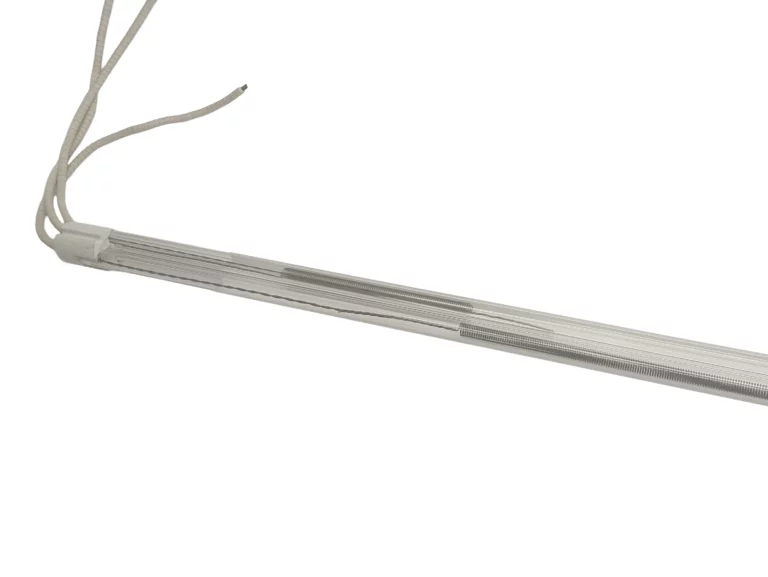
Kanthal-based long wave emitters from DR. FISCHER operate with coil temperatures under 1200 K. TWIN tube solutions are available in 33 × 15 mm geometry, while single tube diameters range from 14 mm to 16 mm. Heating lengths extend up to 2500 mm (twin) and 1500 mm (single). A power density around 25 W/cm supports mild, consistent heat output and energy-efficient operation in comfort-oriented and low-temperature industrial applications.
Specifications of IR Long Wave Kanthal Lamps
These emitters are designed for scenarios where intense radiant power is not required but a controlled and comfortable heat environment is essential. With their robust Kanthal heating wire and durable quartz glass construction, they provide long-lasting service in both commercial and industrial installations.
Specifications
| Feature | Specification |
|---|---|
| Color temperature of the coil (K) | < 1200 K |
| Tubes (section in mm) |
33 × 15 (twin) 14 to 16 mm (single) |
| Heating length (mm) |
2500 mm (twin) 1500 mm (single) |
| Power density (W/cm) | 25 |
| IR reflectors | ||||||
|---|---|---|---|---|---|---|
| Reflectivity | Durability | Cost | Radiation orientation | Main advantages | Main drawbacks | |
| Gold | ☆☆☆☆☆ | Bad | €€€€ | Specular | - High reflectivity - No thermal inertia |
- Low temperature resistance (<600°C) - High cost |
| White ceramic | ☆☆☆ | Very good | €€ | Diffuse | - Good price-performance ratio | - Reflectivity 10 to 15% lower than gold |
| MLRI | ☆☆☆☆ | Very good | €€€ | Diffuse | - Reflectivity between the white ceramic and gold | - Slightly more expensive and slightly less stable than white ceramic |
| LRP | ☆☆☆☆☆☆ | Excellent | €€€€ | Specular | - Best Reflectivity - Auto-cleaning - Longer lifespan than all other reflectors |
- Expensive to start with (but no need to replace it with the lamp) - Thermal inertia |
| Highly reflective aluminum | ☆☆☆ | Good | €€€ | Specular or diffuse (depends of the finish) | - Can be combined with other reflectors | - Added piece → takes more space |
Typical Applications of IR Long Wave Kanthal Lamps :
Drying and Curing
Fast and efficient curing of coatings, adhesives, inks, and varnishes in industrial processes.Plastic Forming and Shaping
Precise and uniform heating of thermoplastic materials for forming, bending, and welding applications.Food Industry Processes
Controlled infrared heating for baking, browning, drying, and sterilization in food production.Textile and Paper Industry
Rapid drying of inks, coatings, and finishes on textiles and paper surfaces.Electronics and Semiconductor Manufacturing
Targeted heating for bonding, soldering, and component processing with high accuracy.Surface Treatment and Coating
Enhanced curing and drying of paints, lacquers, and industrial coatings with minimized heat loss.
By leveraging the efficiency and flexibility of IR Long Wave Kanthal Lamps technology, you can achieve faster process times, reduced energy costs, and reliable results across a wide range of industrial heating applications.
Contact us
Located in Pont-à-Mousson in Eastern France, it is the largest factory of the group. This entity is also the largest European center of expertise that develops, manufactures, and markets infrared heating lamps and modules, UV lamps and modules, halogen lamps, as well as LED solutions.